
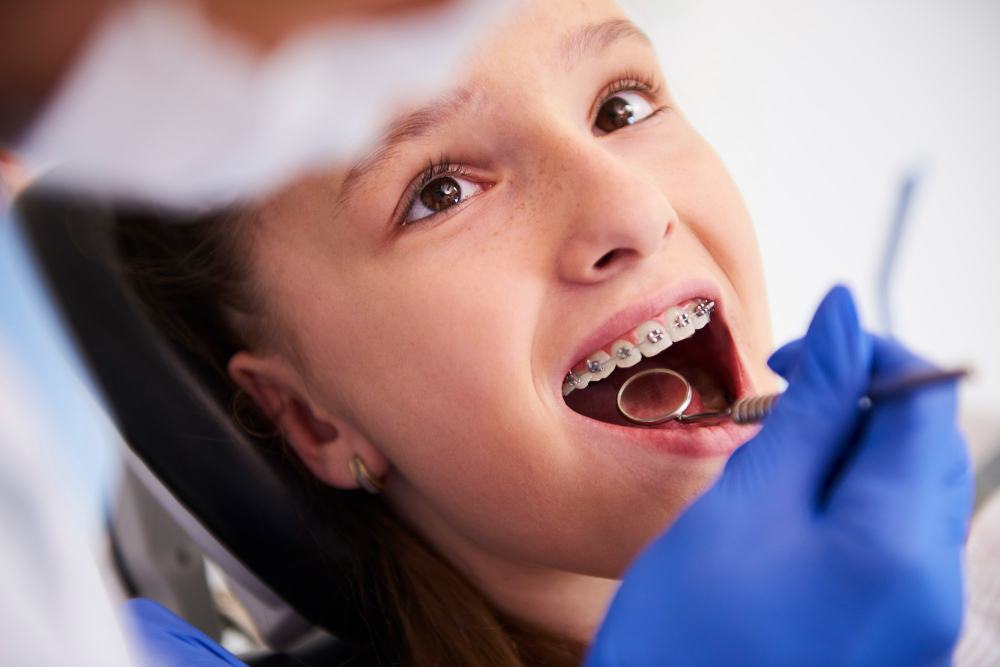
Many parents wonder when to start thinking about braces or other dental care for their children. Early orthodontic treatment can make a big difference in a child’s dental health. According to the American Association of Orthodontists, age 7 is the best time for a first orthodontic check-up. At this age, a child’s mouth is still growing, so early care can help prevent bigger problems later. In this blog, we will explain why early orthodontic evaluation for children is so important and what parents should know.
What Is Early Orthodontic Treatment?
Early orthodontic treatment means starting dental care before all adult teeth come in. Usually, this happens between ages 6 and 10. At this stage, a child still has some baby teeth and some adult teeth. Because the mouth is still growing, orthodontists can guide teeth and jaw development more easily. Early braces for kids or other devices may be used to fix small problems before they become bigger.
Why Age 7 Is Recommended for the First Orthodontic Check-Up
At age 7, most children have a mix of baby and adult teeth. Because of this, orthodontists can spot problems early. The American Association of Orthodontists recommends the first orthodontist visit at age 7. Even if your child’s teeth look straight, hidden issues may exist. Early checks help catch these problems before they get worse.
Signs Your Child May Need Early Orthodontic Evaluation
Not every child will need early orthodontic treatment. However, some signs may show your child needs an orthodontic evaluation for children. For example, watch for these signs:
If you notice any of these, it is a good idea to schedule a check-up. Early action can help your child avoid bigger dental issues later.
Benefits of Early Orthodontic Treatment
Early orthodontic care offers many benefits. First, it can help guide jaw growth and make space for new teeth. In addition, it can lower the risk of injury to front teeth that stick out. Early braces for kids may also help improve speech and chewing. Because treatment starts early, it may reduce the time your child needs braces later.
For families seeking orthodontic care in their area, early treatment can save time and money in the long run.
What to Expect During the First Orthodontic Visit
During the first orthodontist visit at age 7, the doctor will check your child’s teeth, jaw, and bite. Usually, the orthodontist will take pictures and X-rays. These help spot any hidden problems. After that, the doctor will explain if your child needs treatment now or later. Sometimes, no treatment is needed right away. Instead, the orthodontist may simply watch your child’s growth over time.
Common Treatments for Young Children
Several treatments may be used for early orthodontic care. Because every child is different, the orthodontist will choose what is best. Some common options include:
With early treatment, many children avoid more serious dental issues later. In some cases, early care can even prevent the need for tooth removal.
Tips for Parents: Supporting Your Child’s Oral Health
Parents play a big role in child dental health. Because good habits start early, you can help your child by:
With your support, your child can enjoy a healthy smile for years to come.
Prevention and Long-Term Oral Health
Preventing dental problems is always better than fixing them later. Early orthodontic evaluation for children helps spot issues before they become serious. Because early care can guide jaw and tooth growth, it lowers the risk of future problems. Regular dental visits and good home care are key. In the long run, these steps help keep your child’s teeth healthy and strong.