
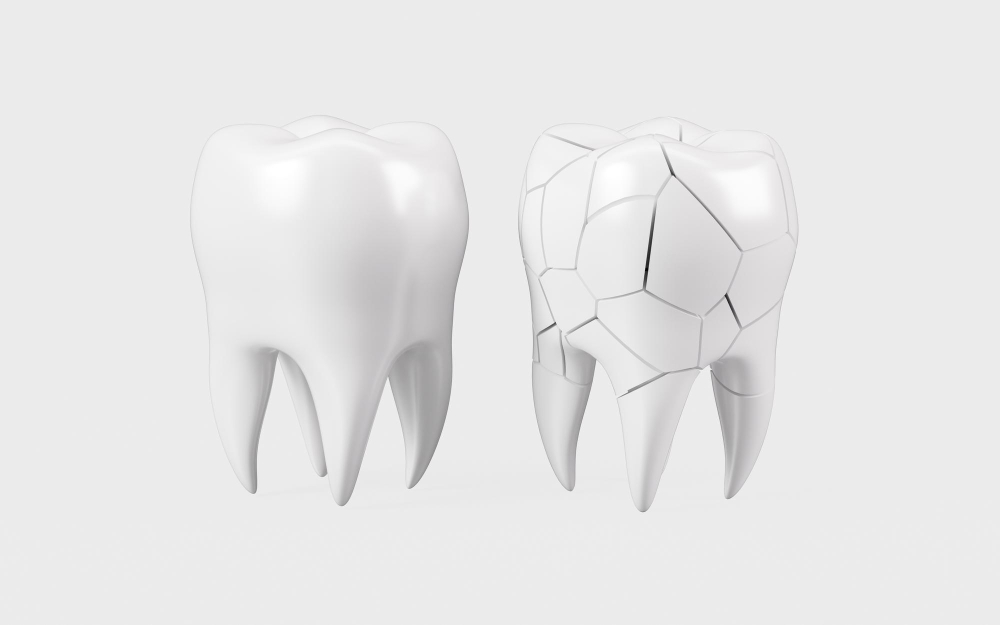
What is Cracked Tooth Syndrome?
Cracked Tooth Syndrome happens when a tooth has a small crack that is hard to see. Often, this crack is too tiny for the eye or even X-rays to spot. However, it can still cause pain or discomfort. Dentists use the term “Cracked Tooth Syndrome” to describe this hidden problem. If left untreated, it can lead to bigger dental issues. According to the American Dental Association, early care is important for a healthy mouth.
Common Symptoms
Many people do not notice the symptoms of cracked tooth right away. Still, some signs can help you spot the problem early. For example, you may feel pain when you bite or chew. Sometimes, the pain comes and goes. Here are common symptoms:
Because these symptoms can be mild, it is easy to ignore them. Yet, early attention can prevent bigger problems.
Causes and Risk Factors
There are several reasons why teeth crack. For instance, biting hard foods like ice or nuts can cause cracks. In addition, teeth with large fillings are more likely to crack. Here are some common causes and risk factors:
Because some risks are hard to avoid, regular dental check-ups are important.
Diagnosis: How Dentists Identify Cracked Tooth Syndrome
Diagnosing Cracked Tooth Syndrome can be tricky. Often, cracks are too small to see. However, dentists use special tools and tests to find them. For example, they may use a bright light or a dental dye to spot cracks. Sometimes, they ask you to bite on a special stick to find the painful spot. X-rays may help, but not always. Therefore, sharing your symptoms with your dentist is key. Early diagnosis helps prevent further damage.
Treatment Options
Treatment depends on how deep and wide the crack is. In many cases, dentists can save the tooth. Here are common dental treatments for cracked tooth:
Because early treatment works best, do not wait if you notice symptoms.
Why Ignoring Cracked Tooth Syndrome Leads to Bigger Problems
Ignoring a cracked tooth can cause serious issues. For example, bacteria can enter the crack and cause infection. Over time, the crack can grow larger. This may lead to tooth loss or gum disease. Here are some risks of untreated cracked tooth:
Therefore, acting early protects your health and saves you from costly treatments later.
Prevention Tips for Healthy Teeth
While not all cracks can be avoided, you can lower your risk. Here are some tips for preventing dental cracks:
Because prevention is easier than treatment, these habits can keep your teeth strong.
When to See a Dentist
If you notice pain when chewing, or if your tooth feels sensitive, see a dentist soon. Even if the pain comes and goes, it is best to get checked. Early care can stop small cracks from becoming big problems. Remember, your dentist can help you find the best solution for your needs.
Consult a dentist promptly if you suspect a cracked tooth for personalized care and to prevent complications.